3 Day a Week Beginner Running Training Plan

This guide is or beginners who want to get into running and build from zero experience, up to being able to comfortably run and start to train for races, or just keep fit!
We’ll answer how often you should run, how long each run should be, what pace to go, and how to avoid getting injured. We’ve also included a downloadable 5k training plan at the end, completely free!
Summary
What you need before you start
How hard should it feel? (the talk test / easy pace)
The 3-day-a-week beginner running plan (week-by-week)
How to progress if a week feels too hard
Couch to 5K vs this plan (what’s the difference?)
When you’re ready for Parkrun
Common beginner mistakes
Injury prevention
FAQ: beginner running questions
Who this plan is for
This plan is for you if you’re new to running, returning after time off, or you want a simple structure without running every day. Running and training plans can be extremely daunting when you’re starting out. Everyone you see online seems to be racking up 50 mile weeks and there can be pressure to try and replicate this, with speed sessions, half marathon long runs, and double session days! However, as a beginner this is the quickest way to get injured. Instead, we suggest you follow this plan and build up your fitness and confidence.
What you need before you start
We’ll keep this bit short as we’ve already written a blog on kit and shoes for beginners, you can check that out here. You don’t need fancy gear, but it helps to have the following:
Comfortable running shoes
Exercise clothing (t-shirts, shorts and a jumper)
Weather-appropriate clothing (rain jacket)
Running sock - to avoid blisters
Something to track your runs with (running watch, Strava)
How hard should it feel? (pace, breathing, easy running)
Most of your running should feel easy enough that…
If you can’t speak in short sentences, that usually means…
Ignore speed for now, because your goal in week one is…
Walking is not failure; it’s the tool that…
The 3 day a week running plan
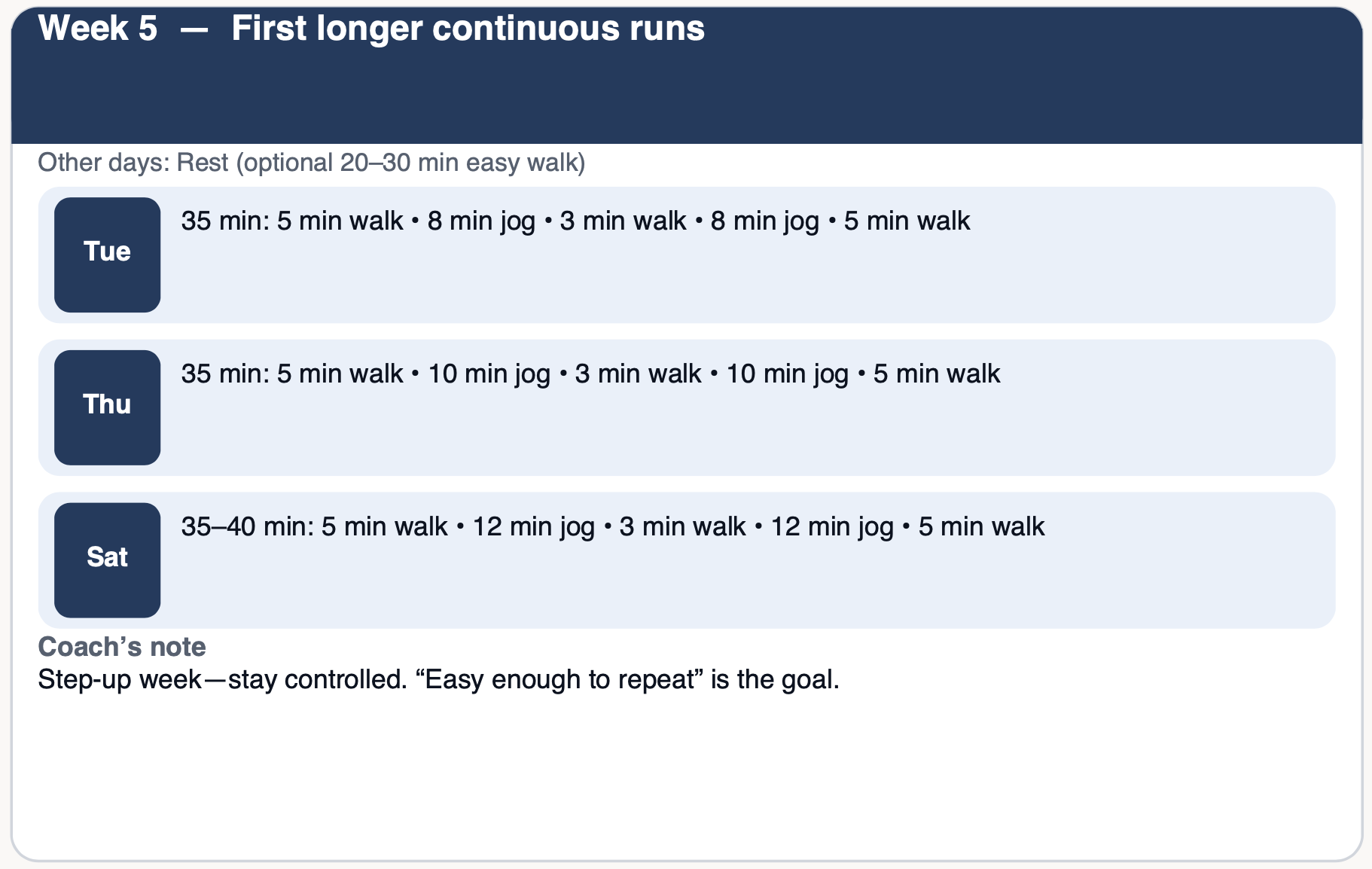
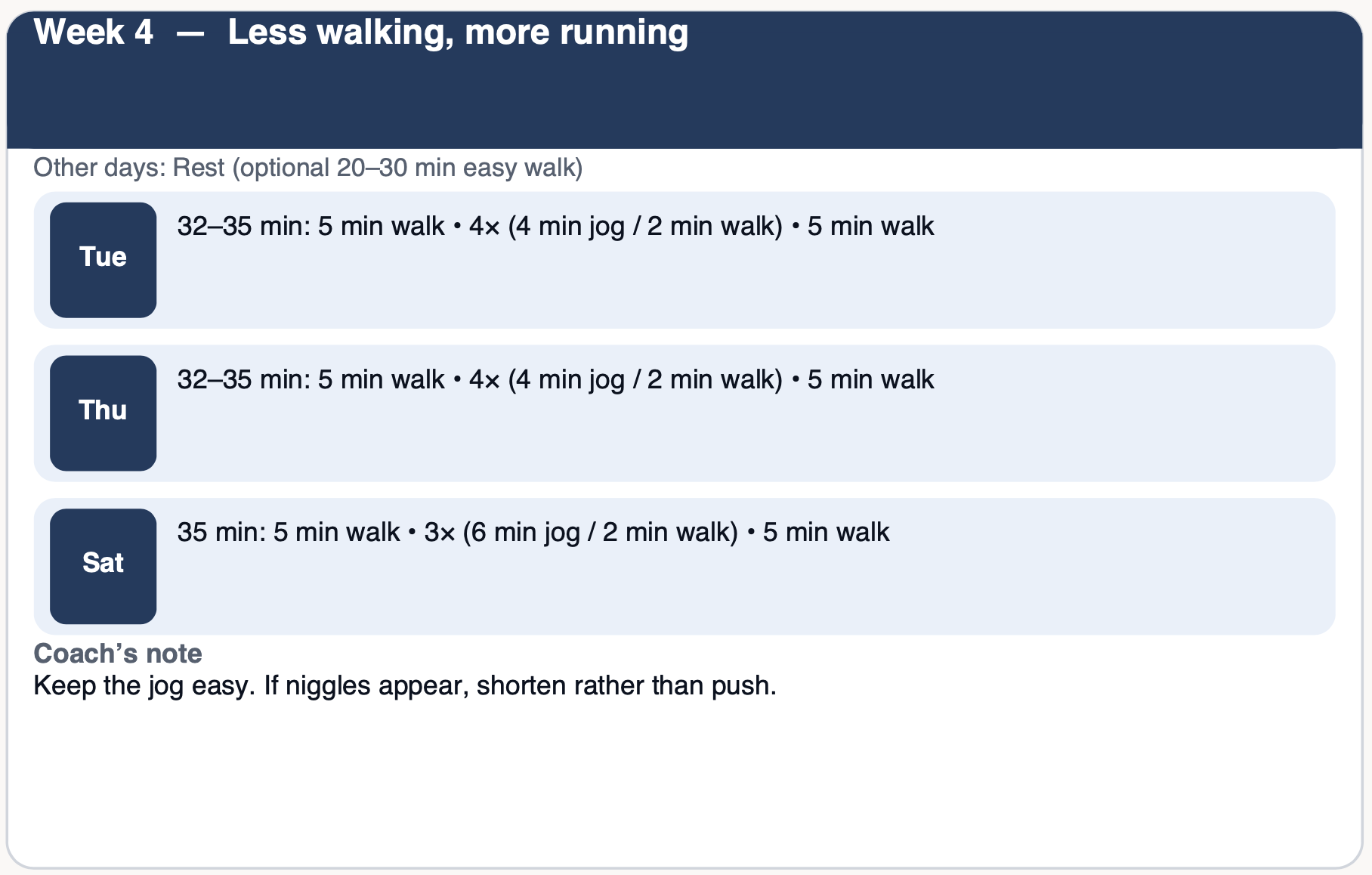
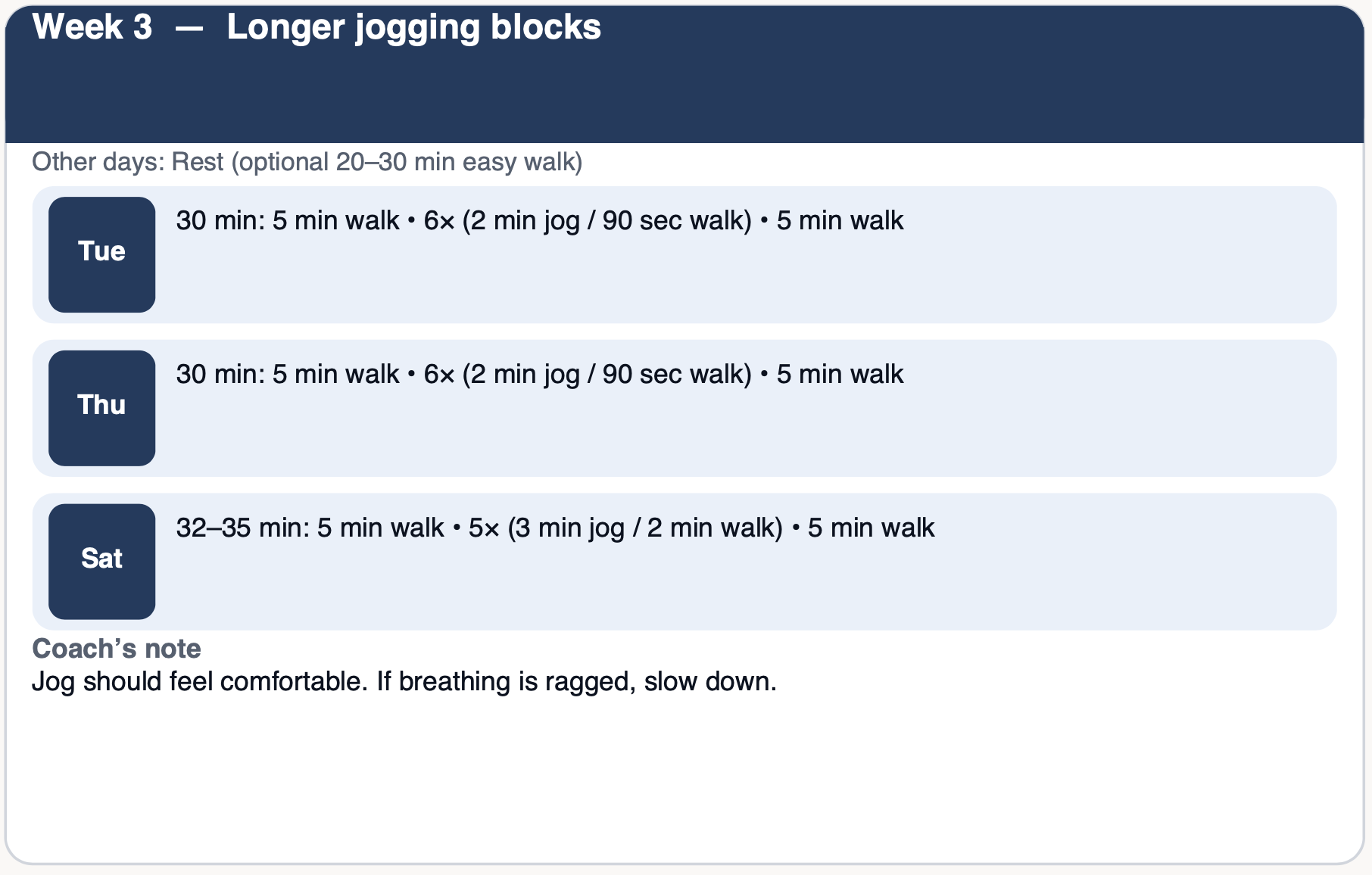
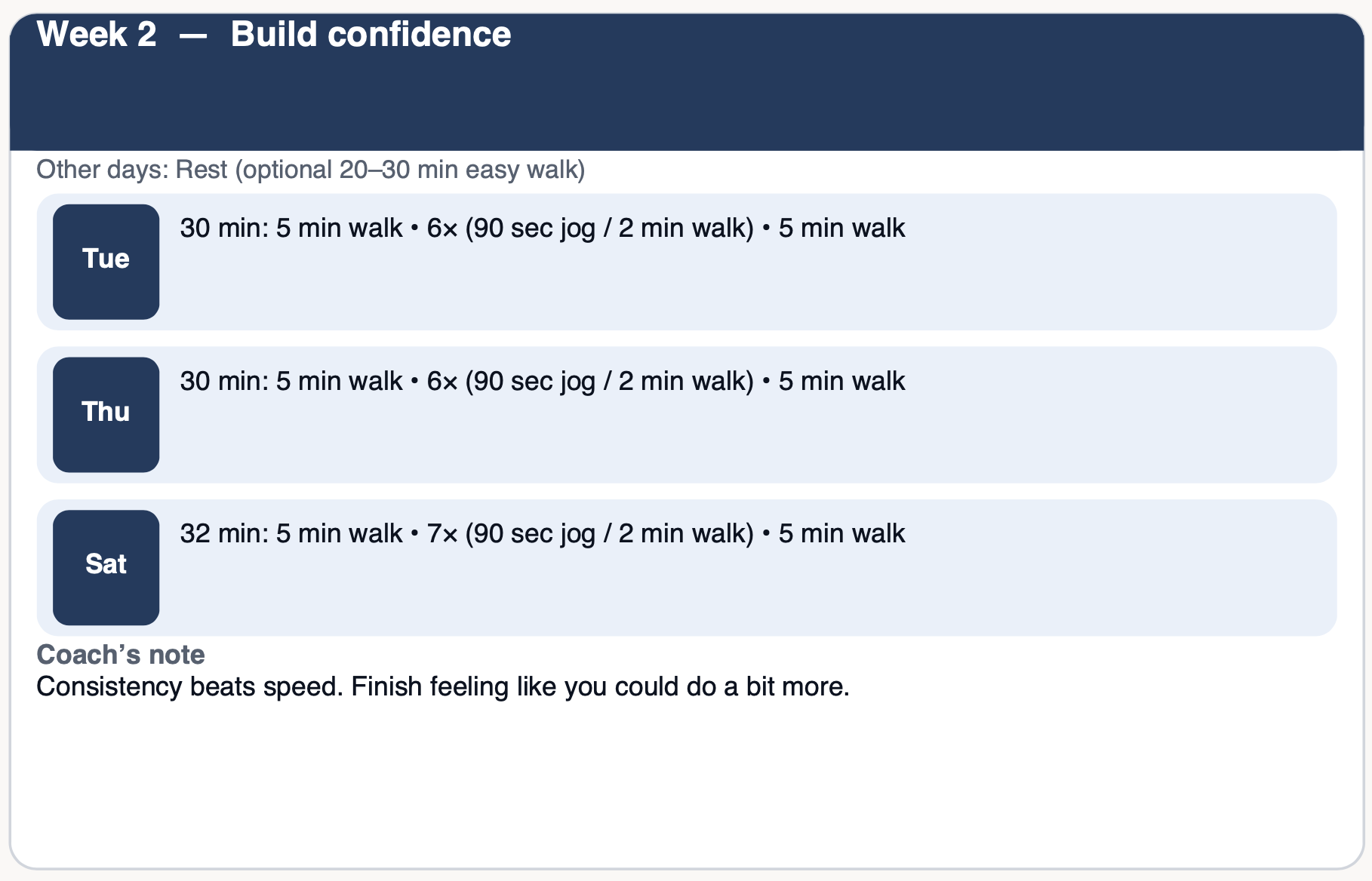
The plan focuses on building up your confidence using the run / walk method, with aim being you’ll eventually run a full 5k in 8 weeks.
You can download the full plan as a pdf below, or click on the Google Sheet link if you’d prefer it as a spreadsheet.
Each week has 3 sessions, all designed to help increase your fitness, get you used to running, and slowly increase the distance in which you run.
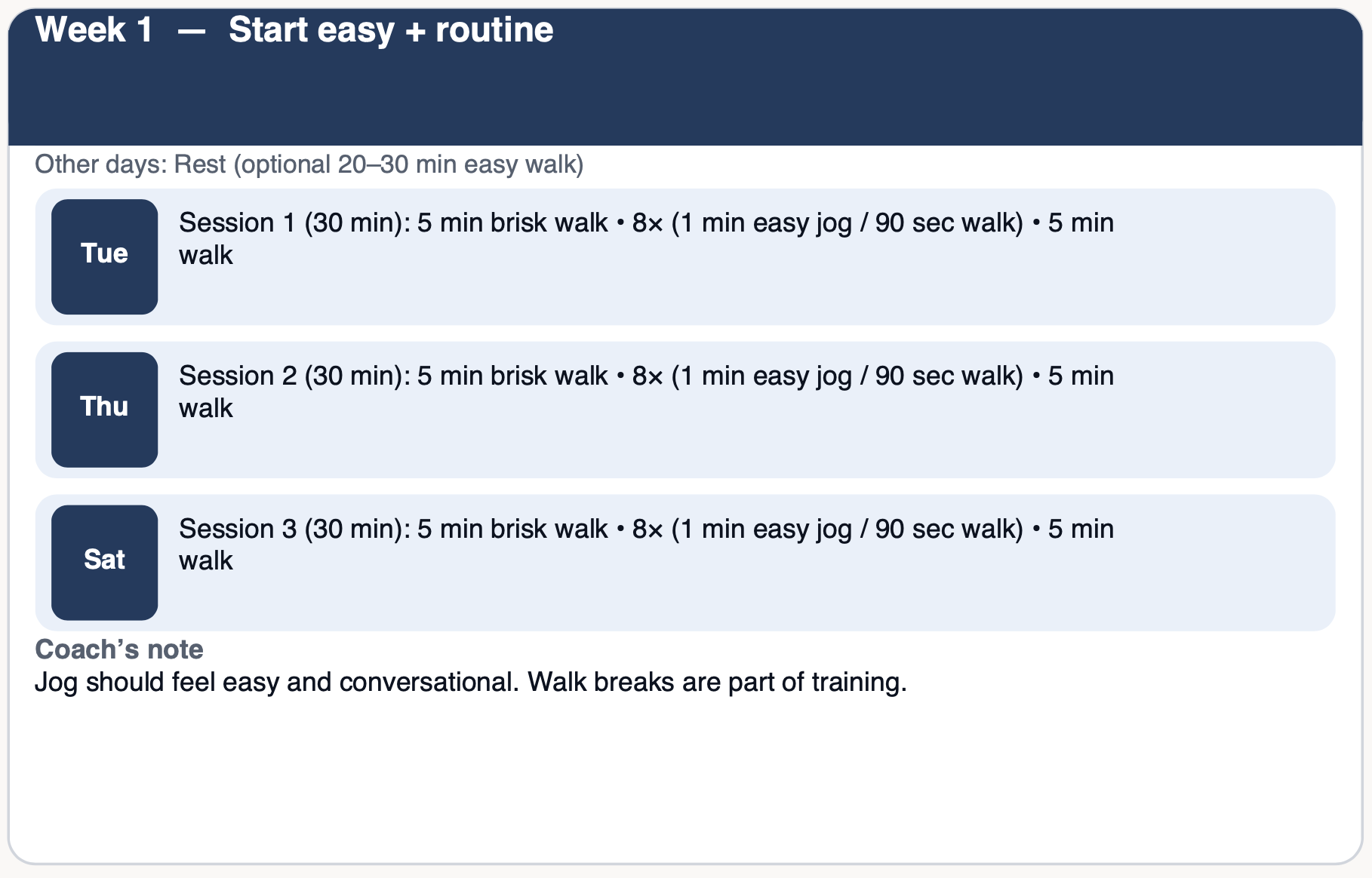
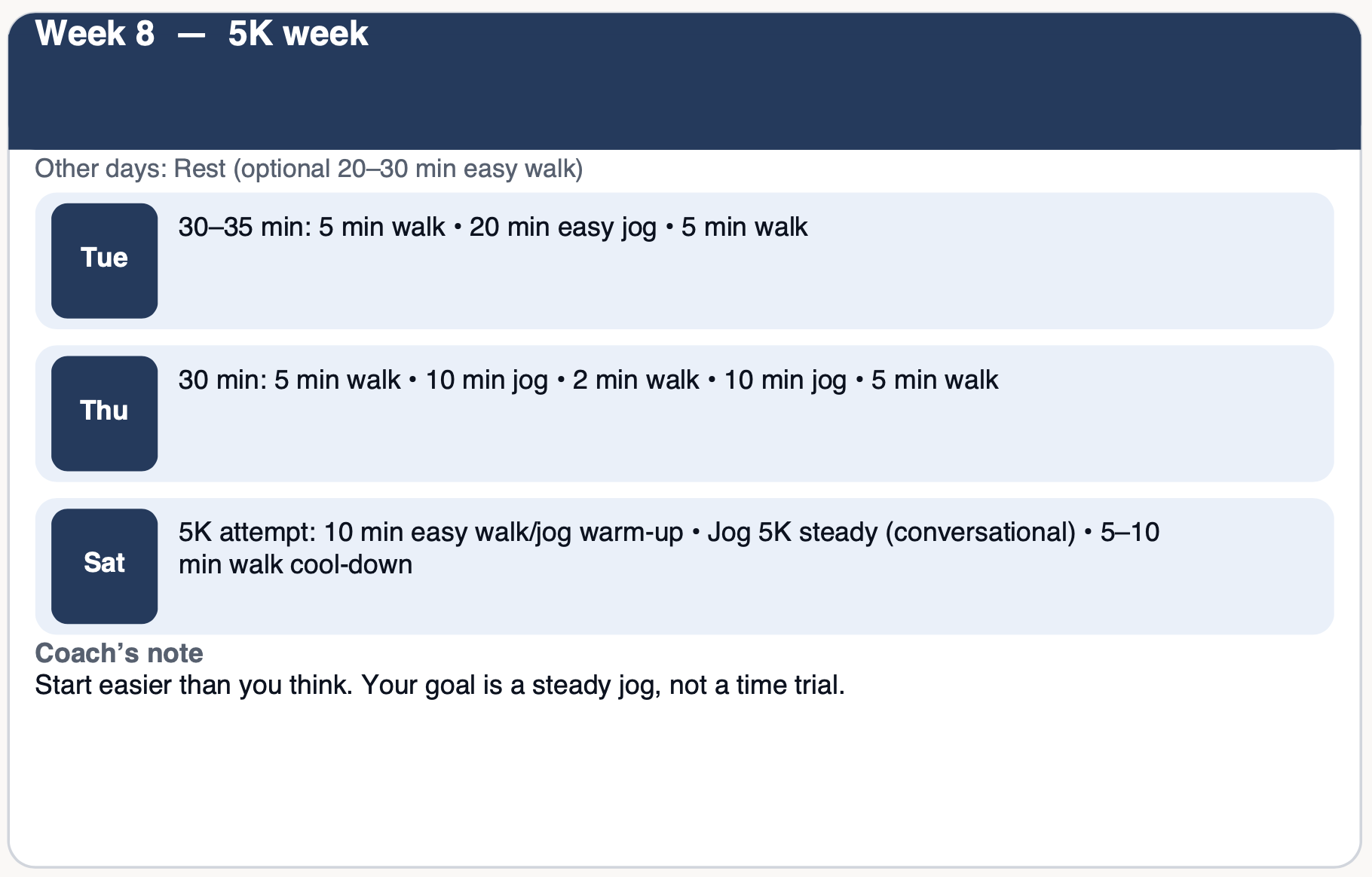
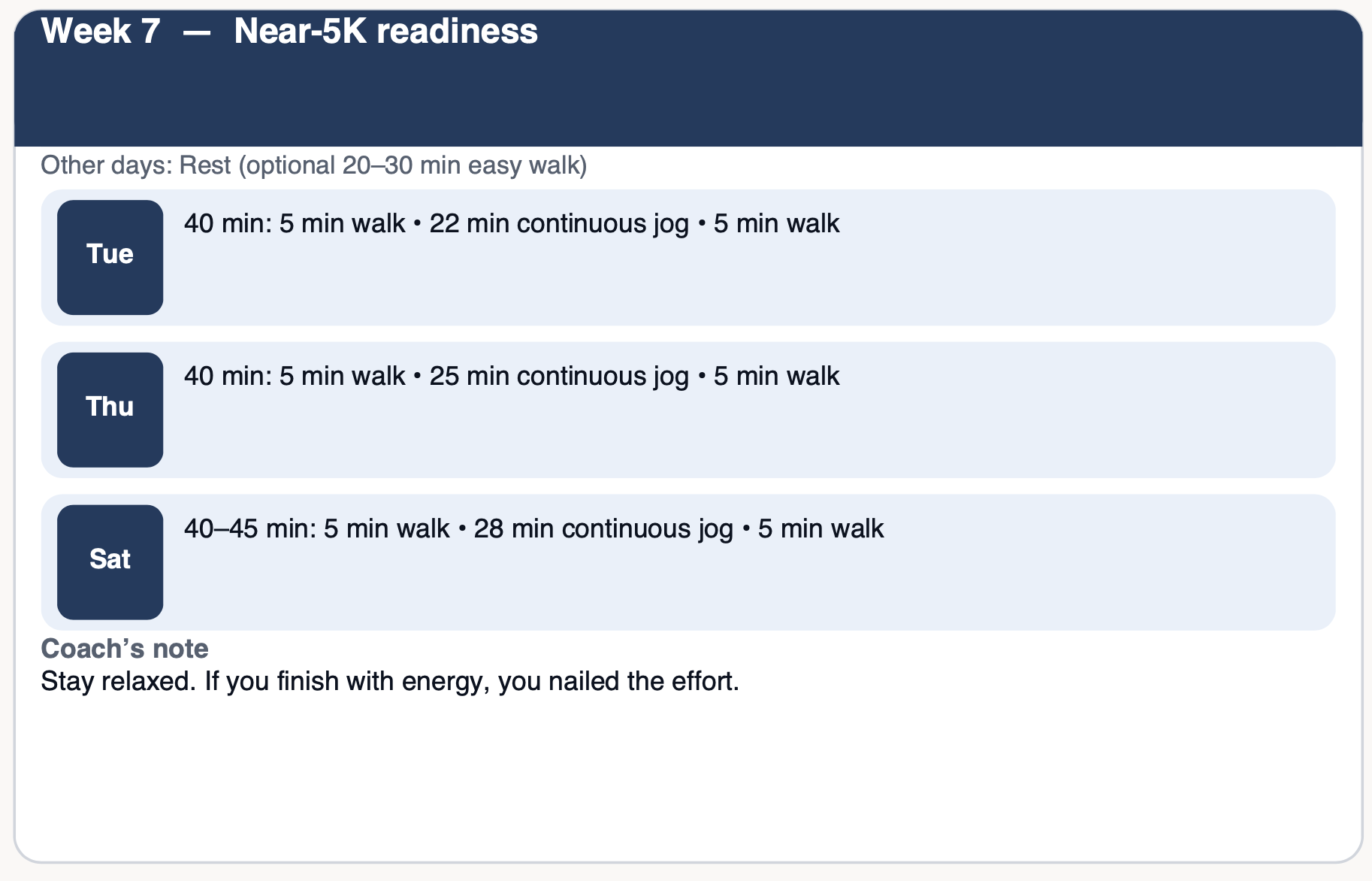
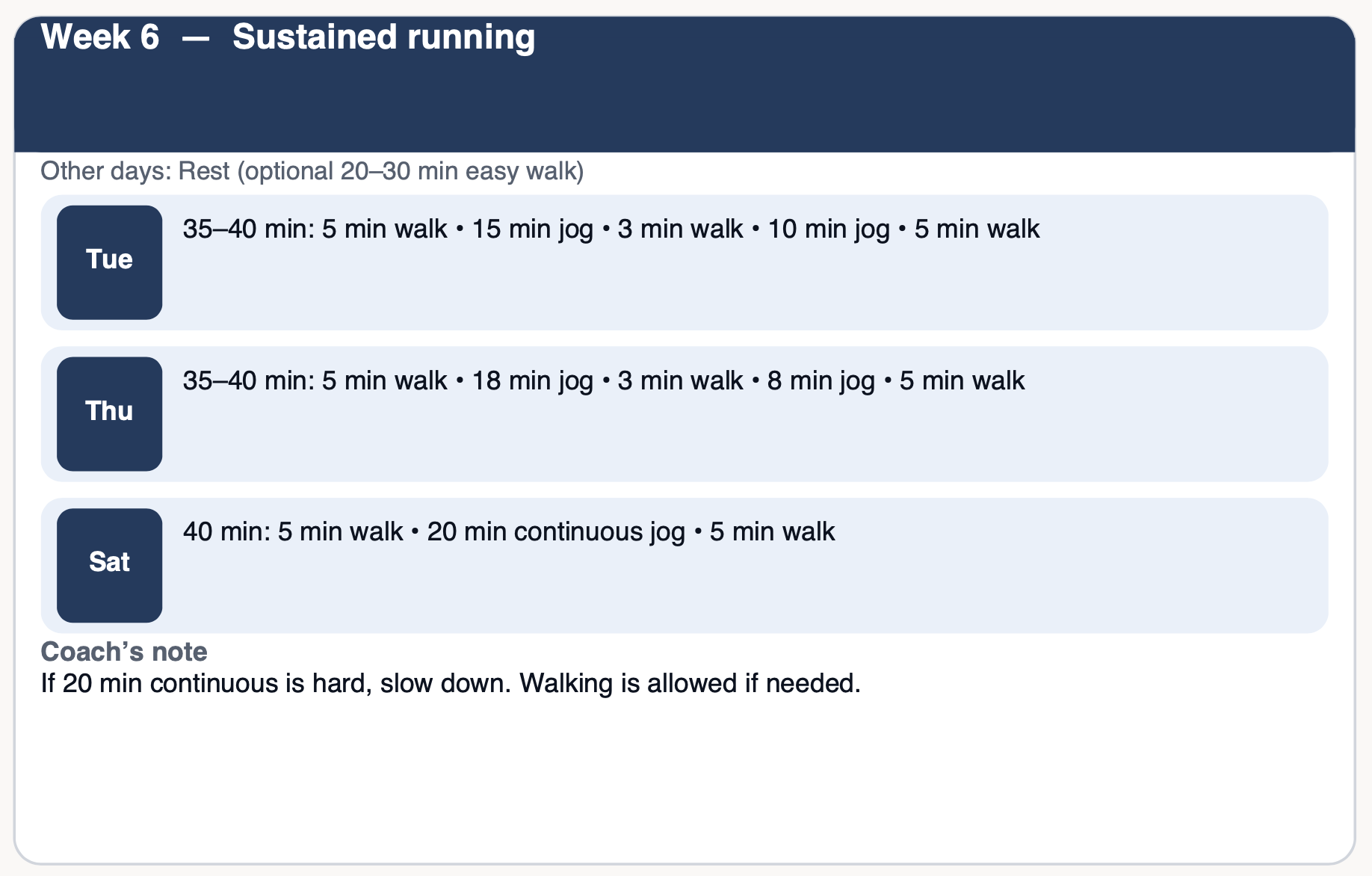
Download plan as a PDF
Download plan as a Google Sheet
Common beginner mistakes
The biggest mistake beginners make is running too fast. You’re not aiming to run as fast as you can and be out of breath. Instead your runs should be at a conversational pace, so you can speak in small sentences, or around your zone 2 heart rate. However, if you’re completely new to running, this will be difficult at first, so just try to stay as close to this pace as you can. If you feel too out of breath, walk until your breathing is under control.
Another mistake is doing too much too soon, which is a quick way to get injured, burnt out or fed up of the plan. Rest is just as important as running as that when your body adapts and gets stronger. Don’t feel guilt about taking a rest day!
It’s also useful to not compare yourself to others, whether that’s with distance, pace or ability. Everyone is different and everyone is on different stages of their running journey, it’s not (always) a competition.
Injury prevention + niggles
Injuries can be common when starting out because your body won’t be used to the strain and physical exertion you’re putting on it. Over time your muscles and bones become stronger, but when you first start running it’s important to take extra care. Here are some tips on how to ensure you stay inury-free.
Warm-up / cool-down
Before each run, spend 3–5 minutes warming up and activating your muscles.
After each run, it’s also important to bring your breathing down and cool down. This could be done with a walk.
Soreness vs pain
Normal post-run soreness feels like achy pains in your legs but goes off soon after the run or a few days after, but pain tends to linger. If your aches hurt to run on, it’s best to take a rest day or two.
If you feel a sharp or worsening pain, the safest move is to rest it and go see your doctor or a physiotherapist.
Strength + mobility (minimalist)
Strength training is very important for running, especially long distance. But when starting out it isn’t essential, we’d say getting the actual miles in will give you more benefit. However, if you have time to strength train it can really speed up your progress.
If you only do one strength routine, we’d recommend compound exercises targeting all muscle groups, but especially the legs.
Mobility work and plyometrics also help to strengthen your muscles and improve efficiency and injury-prevention when running. Incorporating these sessions once a week will also help benefit your progress.
How to progress if a week feels too hard
If you struggled to finish a session, the best next step is to re-do that week until it feels comfortable to you. Do not continue to progress if you can’t complete the sessions as this will lead to burnout and potentially injury.
If you miss a week, it’s also best to jump back to the previous week and start again from there. There’s no need to start again from the beginning (unless you want to).
Progress is not linear, especially when you’re new to running. You might find the sessions are becoming too easy for you. If this is the case you might feel comfortable skipping a week and this is completely fine.
FAQs
-
This plan runs for 8 weeks and you’ll know you’re ready to move on when you’re comfortable doing the sessions. They should be challenging but not too straining.
-
If you miss a week, restart by going back to the previous week and starting from there. If this is still too challenging, go back to the week before that.
-
If you run in the morning, a simple option is some porridge, a banana or some toast. If you’re eating balanced meals throughout the day, there’s no need to pack a load of calories before a run as this could lead to stomach issues.
-
This causes a lot of debate within the running community. Some runners swear by stretching, and others never have done it, and never will. If you’re recovering from an injury or your muscles are feeling tight, we’d recommend dynamic stretching before your session. However, the best advice is to listen to your body.
-
This question also divides the running community. You can’t replicate the benefits of running outside, however, treadmill running still has tons of benefits and can massively help you progress. If the weather isn’t great or you’re short on time, treadmills are a great option. Treadmills can also be used to build confidence if you’re not comfortable running outside yet.
-
For your first 5k, time is not important. Running a full 5k without stopping is a huge achievement in itself. Once you’ve accomplished this, you can worry about improving your time.
-
Walking is part of this plan because not many people will be able to just get out and run non-stop straight away. There are huge benefits to walking and this will help you build up your running distance.
Summary & next steps
Your next step is to choose your three days and get stuck in. Go at your own pace and don’t feel pressure to move on too quickly. If you want accountability, consider getting a running buddy and doing the sessions together, this can really help with motivation. Parkrun is also a great option, you get a real sense of community and you’ll be motivated to continue going every week.
If you’re completely new to running, our complete guide to beginner running can be found here. It’s a great place to start and tell you everything you need to know.